Description
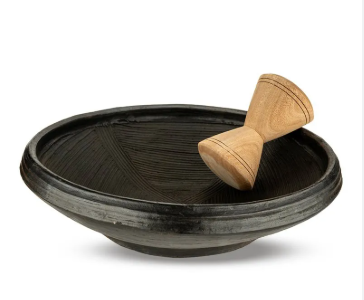
An Earthenware Bowl, famously known as an Asanka (or Apotoyewaa in Akan), is a traditional Ghanaian grinding pot. Often called a “traditional blender,” it is a heavy clay bowl with a ridged interior, designed to be used with a wooden pestle known as a Tapoli.
🌟 Key Features & Traditional Uses
-
The Design: The bowl is made from natural red or black clay. The ridges on the inside are the secret to its efficiency—they create friction, allowing you to grind vegetables and spices into a smooth paste much faster than a flat-surfaced bowl.
-
Grinding & Blending: It is primarily used to grind fresh chili peppers, tomatoes, onions, ginger, and garlic for sauces like Mako (fresh pepper sauce) or bases for Jollof and palm nut soup.
-
Serving: Beyond preparation, it is a popular serving dish for traditional meals like Fufu, Banku, and Rice Balls. Many believe the porous clay keeps the food warmer for longer and adds a subtle, earthy flavor.
-
Health & Flavor: Unlike electric blenders, the Asanka doesn’t generate heat, which many chefs argue preserves the volatile oils and “true” flavors of the fresh spices.
🧼 Care and Seasoning (Important!)
Because it is made of porous clay, it requires special care:
-
Seasoning (First Use): 1. Rinse with warm water to remove clay dust. 2. Some traditional methods suggest grinding coarse salt or a handful of cooked rice with a little oil inside the bowl to seal microscopic pores and smooth out the ridges.
-
Daily Cleaning: Avoid dish soap. The clay can absorb the soap, which will then bleed into your next meal. Instead, use warm water and a soft brush. For stubborn odors, a scrub with coarse salt or a lemon wedge works perfectly.
-
Drying: Always allow it to air-dry completely (upside down) before storing to prevent mold.


Reviews
There are no reviews yet.